
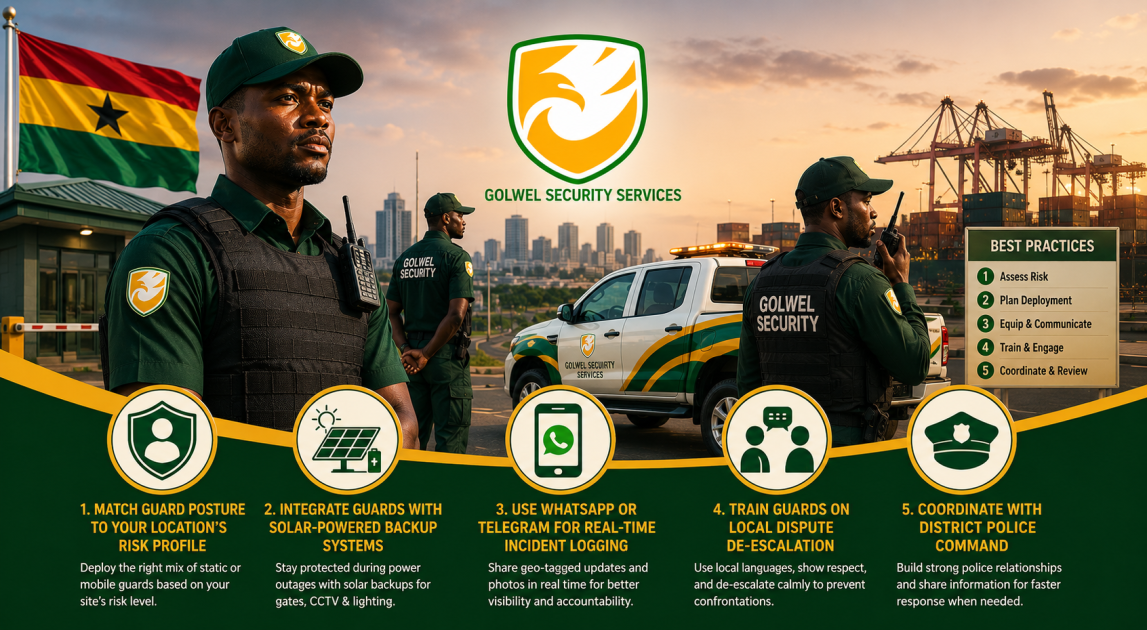
Deploying security guards—whether static at a facility or mobile across multiple sites—requires more than just scheduling shifts. To ensure safety, accountability, and rapid response, follow these five best practices.
1. Conduct a Thorough Risk Assessment First
Before posting any guard, map entry points, blind spots, high-value assets, and historical incident areas. Static guards work best at chokepoints; mobile guards excel at covering large perimeters.
2. Implement Checkpoint-Based Patrol Logs
Use NFC tags or QR codes at key locations. Mobile guards scan these during rounds, creating tamper-proof digital records. This reduces idle time and improves accountability by 40%.
3. Blend Technology with Human Presence
Integrate guard tours with live CCTV feedback. A control room operator can alert a mobile guard to a suspicious event before it escalates.
4. Establish Clear Communication Protocols
Every guard needs a two-way radio or secure app with geofencing. Define codes for common incidents (e.g., "Code Blue" for unauthorized entry) and run monthly drills.
5. Schedule Rotations to Prevent Fatigue
Static guards lose focus after 90 minutes on a fixed post. Rotate positions every 2 hours and limit mobile patrols to 8-hour shifts with mandatory breaks.
Pro tip: Review incident reports weekly to refine deployment patterns. Effective guarding is dynamic, not static.